Yotsugi was playing with a grid $A$ of height $h$ and width $w$, which was initially filled with zeroes by applying the following 2 operations in some order:
- Pick values $i, j$ ($0 \le i \le h - 1, 0 \le j \le w - 1$) and sign $+$ or $-$, and change values $A_{i,j}, A_{i,j+1}, A_{i+1,j}, A_{i+1,j+1}$ to $A_{i,j} \pm 2, A_{i,j+1} \pm 1, A_{i+1,j} \pm 1, A_{i+1,j+1} \pm 2$ correspondingly, where $\pm$ is replaced with the chosen sign. Here Yotsugi considers $A_{h,j}$ to be equivalent to $A_{0,j}$ and $A_{i,w}$ to be equivalent to $A_{i,0}$. In other words, she treats her grid as a torus.
- Pick values $i, j$ ($0 \le i \le h - 1, 0 \le j \le w - 1$) and sign $+$ or $-$, and change values $A_{i,j}, A_{i,j+1}, A_{i,j+2}, A_{i+1,j}, A_{i+1,j+1}, A_{i+1,j+2}, A_{i+2,j}, A_{i+2,j+1}, A_{i+2,j+2}$ to $A_{i,j} \pm 2, A_{i,j+1} \pm 5, A_{i,j+2} \pm 2, A_{i+1,j} \pm 5, A_{i+1,j+1} \pm 5, A_{i+1,j+2} \pm 5, A_{i+2,j} \pm 2, A_{i+2,j+1} \pm 5, A_{i+2,j+2} \pm 2$ correspondingly, where $\pm$ is replaced with the chosen sign. As in the previous operation, Yotsugi treats the grid as a torus.
For easier understanding of the operations, refer to the notes section.
On the next day, the grid was eaten by the fire-breathing slug, and now Yotsugi wonders how many possible grids she could have if, after she finished applying operations, all values $A_{i,j}$ lay in $[0, k]$. Notice that when Yotsugi was applying operations, values $A_{i,j}$ could be negative or exceed $k$. Since the answer can be large, help her find it modulo $10^9 + 9$.
Input
First line contains 3 integers $h, w, k$ ($3 \le h, w \le 1\,000$, $1 \le k \le 10^9$) — size of the grid and maximum possible value in the grid.
Output
Output the answer to the problem modulo $10^9 + 9$.
Examples
Input 1
3 3 1
Output 1
2
Input 2
4 4 52
Output 2
972950693
Input 3
7 10 123
Output 3
93519598
Note
For example, if we had a $4 \times 4$ matrix, we could apply the operations in the following manner:
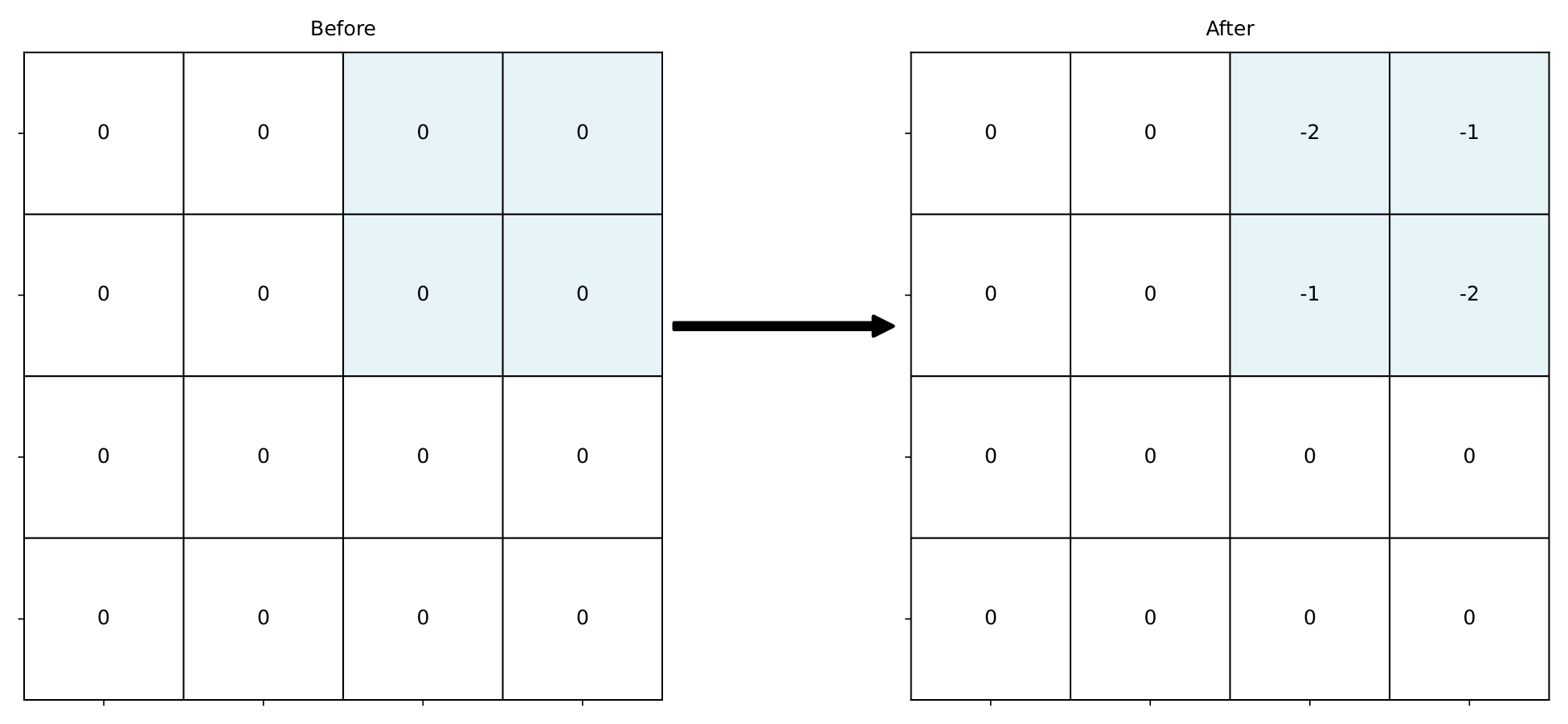
Applying the first operation with sign $-$.
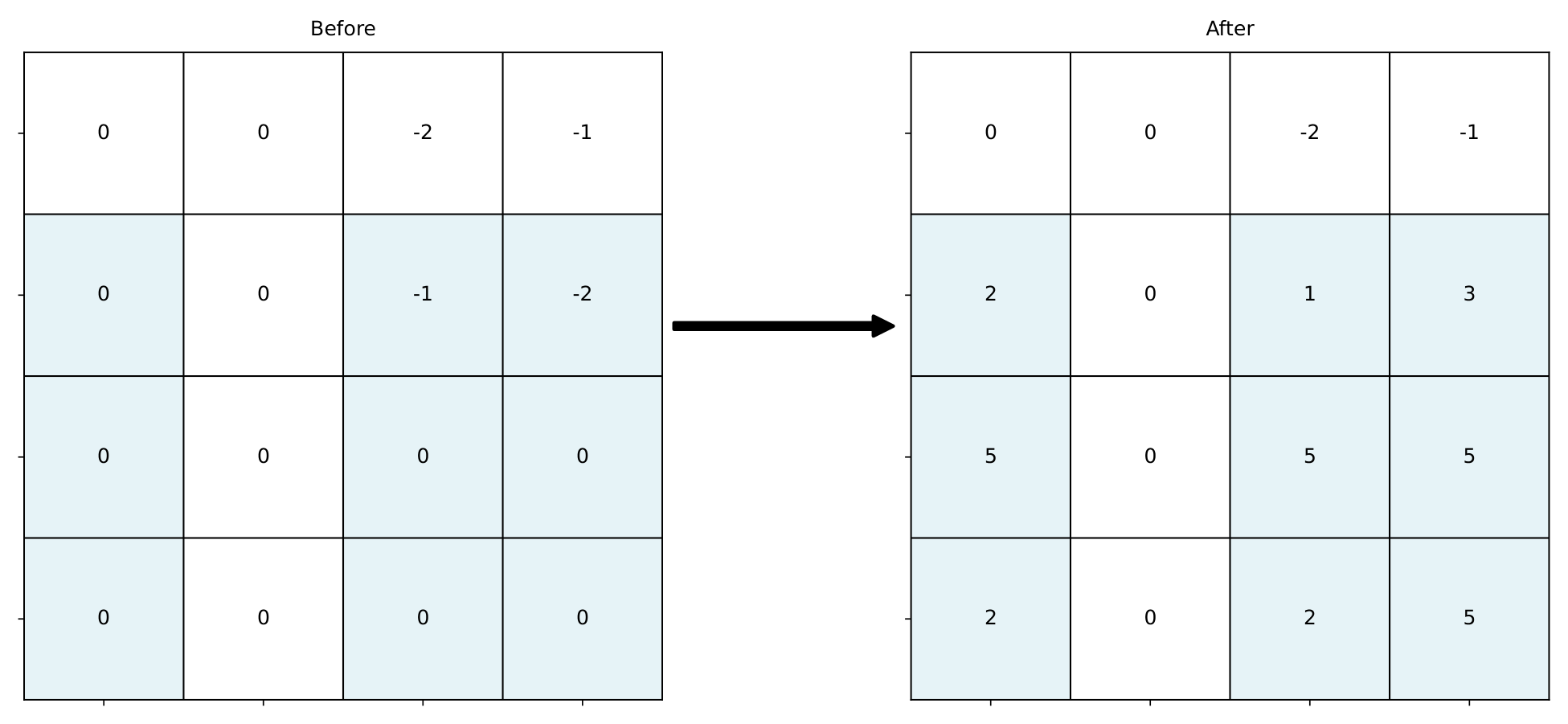
Applying the second operation with sign $+$.
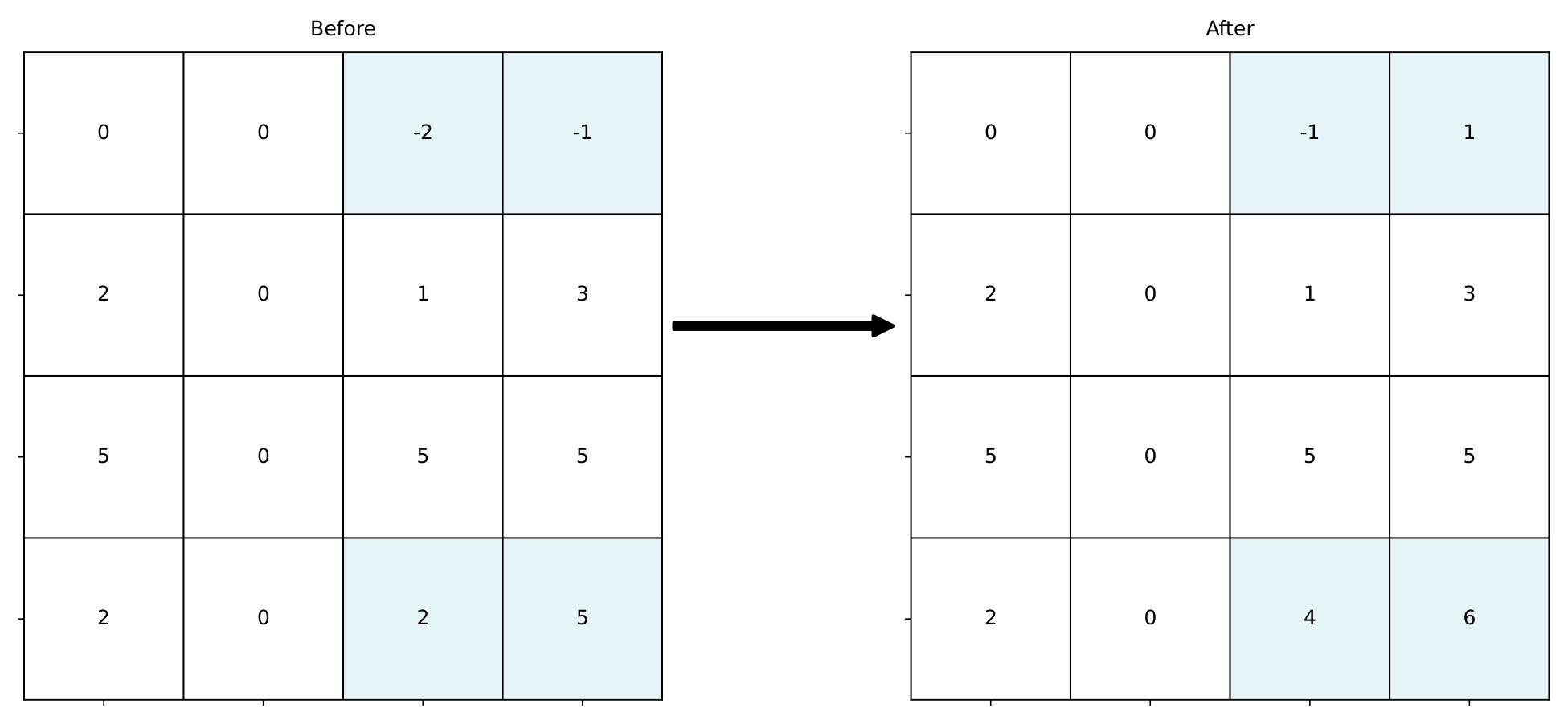
Applying the first operation with sign $+$.
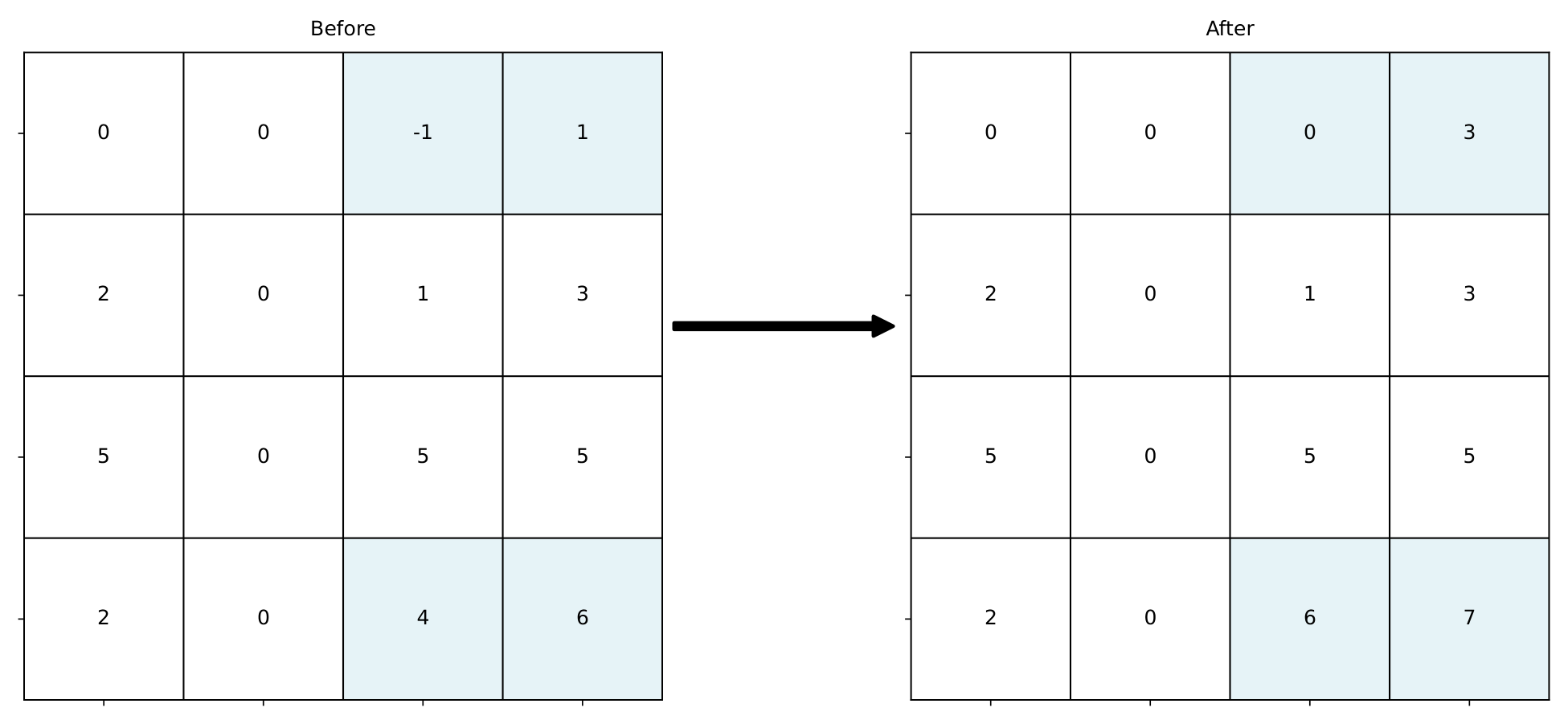
Applying the first operation with sign $+$.
And since all values lie in $[0, 42]$, this is one of the matrices you are asked to count in the second sample.